
Portable Power Stations for CPAP Camping (Pure Sine Wave)
Shopping for a cpap power station for camping pure sine output? I pulled compact, pure-sine units on Amazon that are proven CPAP-friendly, then mapped how many nights you’ll get per charge, DC vs AC losses, and which solar panels pair well.
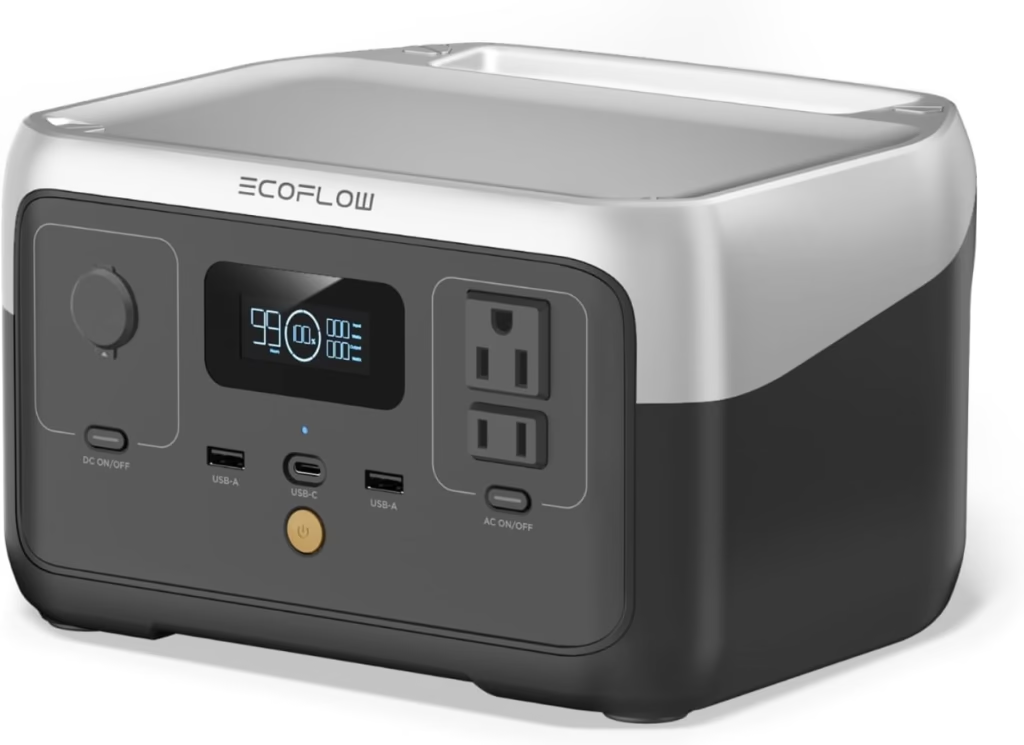
Quick picks
| EcoFlow RIVER 2 — 256Wh, LFP battery | 300W (600W surge) pure-sine AC, super fast wall charge. | Check on Amazon |
| BLUETTI EB3A — 268Wh, LFP | 600W pure-sine AC inverter; very fast recharge options. | Check on Amazon |
| Jackery Explorer 300 — 293Wh | 2× pure-sine AC outlets (300W). | Check on Amazon |
| Jackery Explorer 240 — 240Wh (budget/ultra-simple) | Pure-sine AC; great as a dedicated CPAP pack. | Check on Amazon |
| ALLWEI 300W — 280Wh (value) | 110V pure-sine AC outlet, USB-C PD. | Check on Amazon |
“Pure sine wave” is explicitly listed on these pages (or the exact model line), which is important for CPAP electronics. EcoFlow’s RIVER line and RIVER 2 show pure-sine AC in product descriptions across Amazon regions.
Watt-hours vs nights (realistic ranges)
Assumptions for one 8-hour night:
- DC setup (preferred): CPAP at 10–15W with humidifier/heated hose off, using the brand’s DC converter → ~90% efficiency.
- AC setup: CPAP at 30–40W via the power station’s inverter (humidifier on or bricks that need AC) → ~85% efficiency.
| Model | Capacity | Nights (DC 10–15W) | Nights (AC 30–40W) |
|---|---|---|---|
| EcoFlow RIVER 2 | 256Wh | ~1.9–2.9 | ~0.7–0.9 |
| BLUETTI EB3A | 268Wh | ~2.0–3.0 | ~0.7–0.9 |
| Jackery Explorer 300 | 293Wh | ~2.2–3.3 | ~0.8–1.0 |
| Jackery Explorer 240 | 240Wh | ~1.8–2.7 | ~0.6–0.9 |
| ALLWEI 300W | 280Wh | ~2.1–3.2 | ~0.7–1.0 |
These are estimates. Your draw depends on pressure settings, mask type, hose heat, and humidifier use. Turning humidifier & heated hose off (or to minimal) dramatically extends runtime.
Pure sine verification (why it matters)
CPAP bricks expect clean, pure-sine AC to avoid heat/buzz and to protect electronics. The Amazon listings call out pure-sine AC for: Jackery Explorer 300/240, BLUETTI EB3A, and EcoFlow RIVER/RIVER 2 models; ALLWEI’s page explicitly states “pure sine wave AC outlets.”
DC vs AC for CPAP (save 15–25% power)
Use DC if your CPAP supports it. Many machines run more efficiently from 12/24V DC using a brand DC/DC converter:
- ResMed AirSense 10: official Air10 DC/DC Converter (24V/90W).
- ResMed AirSense 11: 65W DC-DC adapters available; ResMed/retail pages document 12→24V converters.
- Philips DreamStation / DreamStation 2: 12V shielded DC cord runs directly off a “car” outlet.
When to use AC: if your CPAP requires its AC brick or you insist on humidity/heat, expect ~15–25% less runtime vs DC.
Solar panel pairing (top-ups off-grid)
A compact 60–110W folding panel can refill these small stations during the day:
- EcoFlow RIVER 2 + 60W panel bundle (solar charge as fast as ~4–7 hours in ideal sun).
- Jackery SolarSaga 100W + Explorer 300/240 (popular camping combo).
- BLUETTI EB3A + PV120/100W bundle options exist on Amazon.
Tip: Keep the station shaded and the panel in full sun (use a DC extension if needed).
Safety notes (CPAP-specific)
Check your CPAP’s manual for power mode (DC vs AC), required adapters/converters, and watt draw.
Ventilation: Don’t bury a running power station in bedding—a CPAP pulls all night; the inverter needs airflow.
Humidifier strategy: For multi-night trips on small stations (≤300Wh), set humidifier/heated hose off or low to double or triple runtime.
Medical caveat: If uninterrupted therapy is essential, size up (≥500Wh) or carry a backup pack.
Product snapshot notes
EcoFlow RIVER 2 (256Wh) — Very fast AC recharge (~1 hr), pure-sine AC; lightweight LFP battery chemistry.
BLUETTI EB3A (268Wh) — 600W pure-sine inverter, LiFePO₄ longevity, quick top-ups.
Jackery Explorer 300 (293Wh) — Two pure-sine AC outlets; a frequent CPAP pick because of size/ease.
Jackery Explorer 240 (240Wh) — Proven, simple, pure-sine entry unit; often used as dedicated CPAP battery.
ALLWEI 300W (280Wh) — Clear pure-sine labeling; strong value for a dedicated CPAP pack.